What is Performance Marketing? Everything you should know
Today’s digital world requires real results, not just reach. Performance marketing has emerged as one of the fastest growing strategies in the digital marketing industry, and for good reason. It’s about clicks, leads, sales – measurable outcomes – not just visibility. With traditional marketing, you pay upfront and there’s no guarantee of results. Performance marketing means you only pay for results. This makes it more cost-effective and more data-driven (numbers-based). Understanding what is performance marketing is the first step every brand, marketer, or business owner should take to stay competitive, improve ROI (return on investment), and make smarter marketing decisions in a fast-changing online landscape.
Performance Marketing meaning
Performance marketing is a result-driven advertising strategy where advertisers pay only when a specific result is achieved, such as a click, lead, sale or an app install.In simple terms, you only have to pay for performance. This model will benefit both businesses and marketers. Brands will get a measurable return on investment and marketers will be rewarded for the results they deliver.
How it works?
The working principle is actually simple – set a goal, run a campaign and pay only when the goal is achieved. Here is the basic flow of the process:
- An advertiser defines what they need (click, signup, purchase or download).
- Ads are placed on relevant channels like search engines, social medias or affiliate networks.
- Users will interact with the ad and complete action.
- The advertiser only pays for the completed actions, not for the impression or reach.
This helps to measure, track and optimize every campaign in real time.
How is it different from traditional marketing?
Traditional marketing is only focused on creating brand awareness through TV, prints and billboards.You will have to pay a fixed cost with no guarantee on results. This model flips everything. Every campaign is backed by data, every decision is driven by metrics and every rupee is accounted for. This is why businesses are shifting budgets from traditional channels to performance focused digital strategies.
Types of Performance Marketing
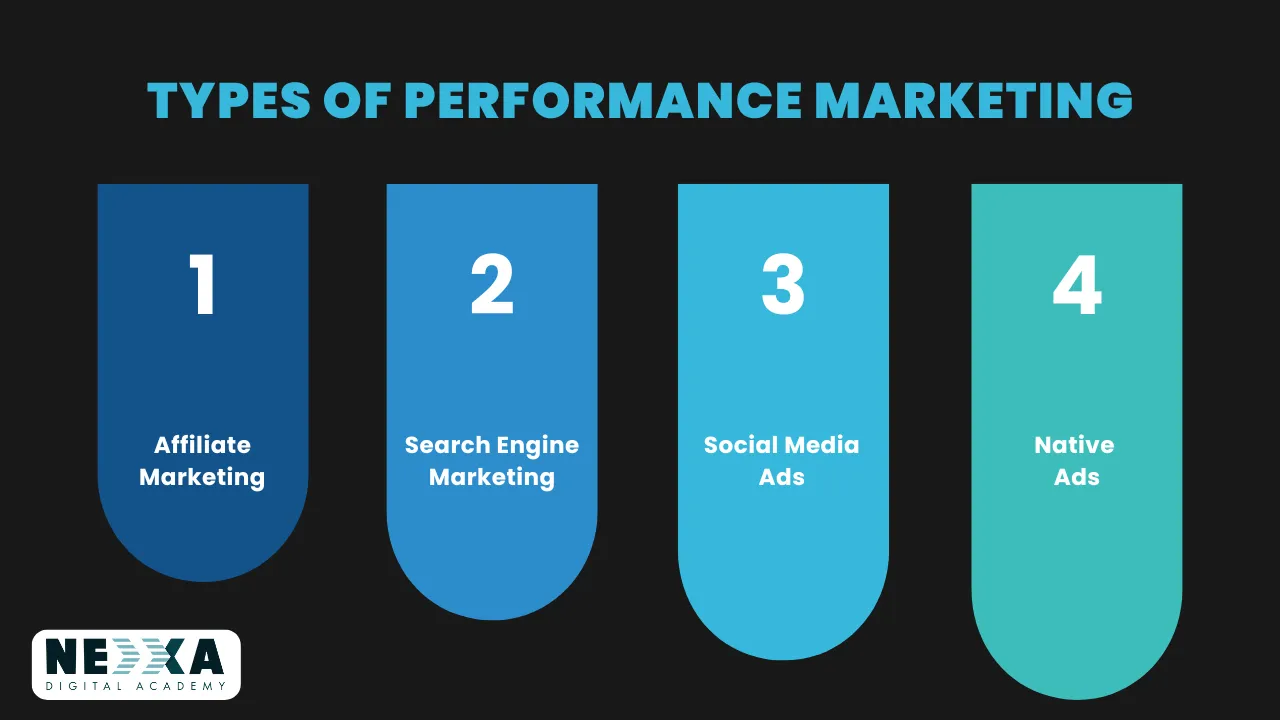
It is not a single tactic, it is an umbrella covering several powerful digital advertising methods, each targeting users at different stages of the buying journey.
1. Affiliate Marketing
Affiliate marketing is one of the most common types. Affiliates, or publishers, promote a brand’s goods or services and get a cut of every sale or lead they bring in. Brands only pay when they get a result, so this is a low-risk, high-reward way to do things.
2. Search Engine Marketing (SEM)
Paid ads on search engines like Google and Bing are part of search engine marketing. Pay-Per-Click means you only pay when someone clicks on your ad. SEM works very well because it goes after people who are already looking for what you have to offer.
3. Social Media Ads
Advertisers can run very targeted paid campaigns on sites like Facebook, Instagram, LinkedIn, and YouTube. You can target social media ads by age, location, interest, and behaviour, and you can also optimise them for clicks, conversions, leads, or app installs.
4. Native Ads
Native advertising is when you put ads that look and feel like the content around them. They show up in news feeds or article pages without being annoying, which makes people more likely to interact with them because they fit in so well with the rest of the experience.
Performance Marketing Channels
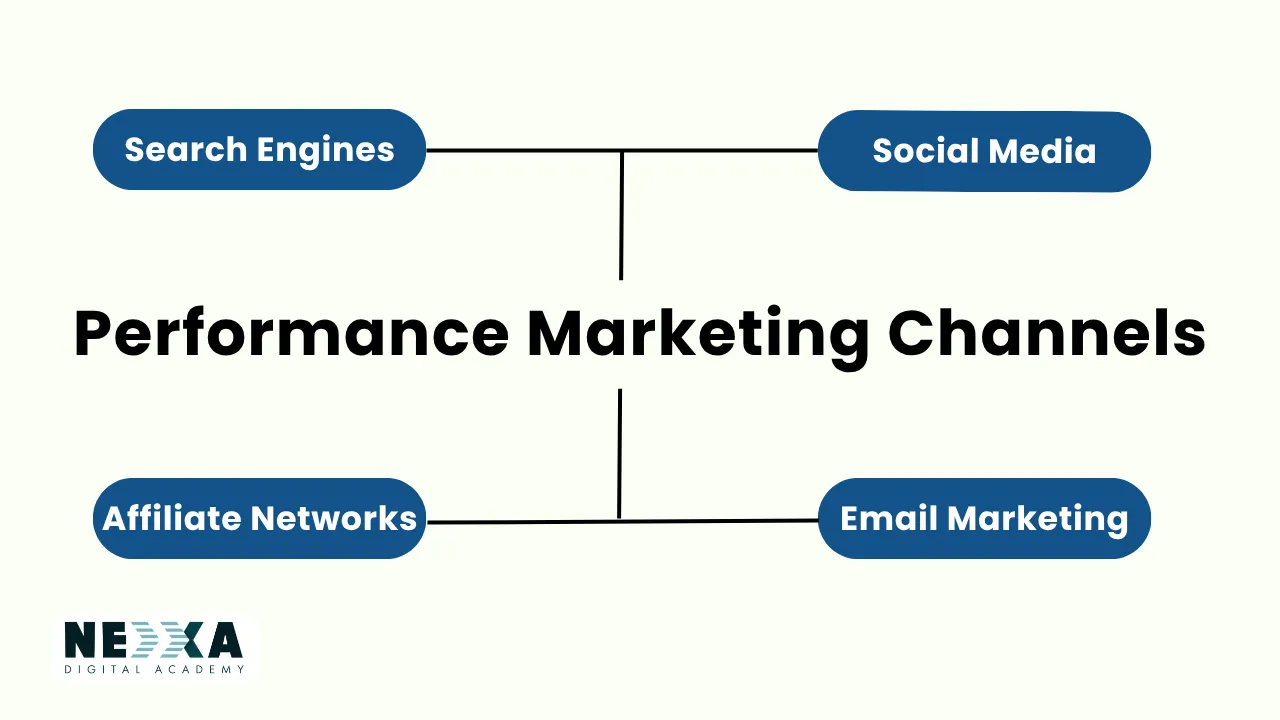
Picking the right performance marketing channels is very important for the success of a campaign. Each channel has its own way of targeting, costs, and audience behaviour.
1. Search Engines
Google Ads and Microsoft Ads are really good at helping people find what they want. These are the ways to get your message to people who are already searching for something to buy. This is great for getting leads selling things online and telling people in your area about what you have to offer. Google Ads and Microsoft Ads are very useful, for this.
2. Social Media
Facebook, Instagram, LinkedIn and YouTube are the social media channels. They are really good at helping us find the people. Facebook, Instagram, LinkedIn and YouTube are great, for getting people to know about a brand then showing them ads again and finally getting them to do what we want.
3. Affiliate Networks
Affiliate networks are really useful because they bring together people who want to sell things with people who can help them sell those things. There are websites like Impact and ShareASale that make it easy for companies to set up these programs. The good thing about these programs is that companies only have to pay when they get the results they want from affiliate networks. This makes affiliate networks a good deal, for companies that want to sell their products using affiliate networks.
4. Email Marketing
Email is a way to get people to buy things from you. When you send emails to the people with things they actually want they are more likely to click on your email and buy something. This is a cheap way to get people to do what you want them to do. You can also set up emails to send automatically to people who are thinking about buying something from you which helps them decide to buy it. This is called email. It is very good, at helping Email drive sales and make people want to buy things from Email.
Performance Marketing Platforms
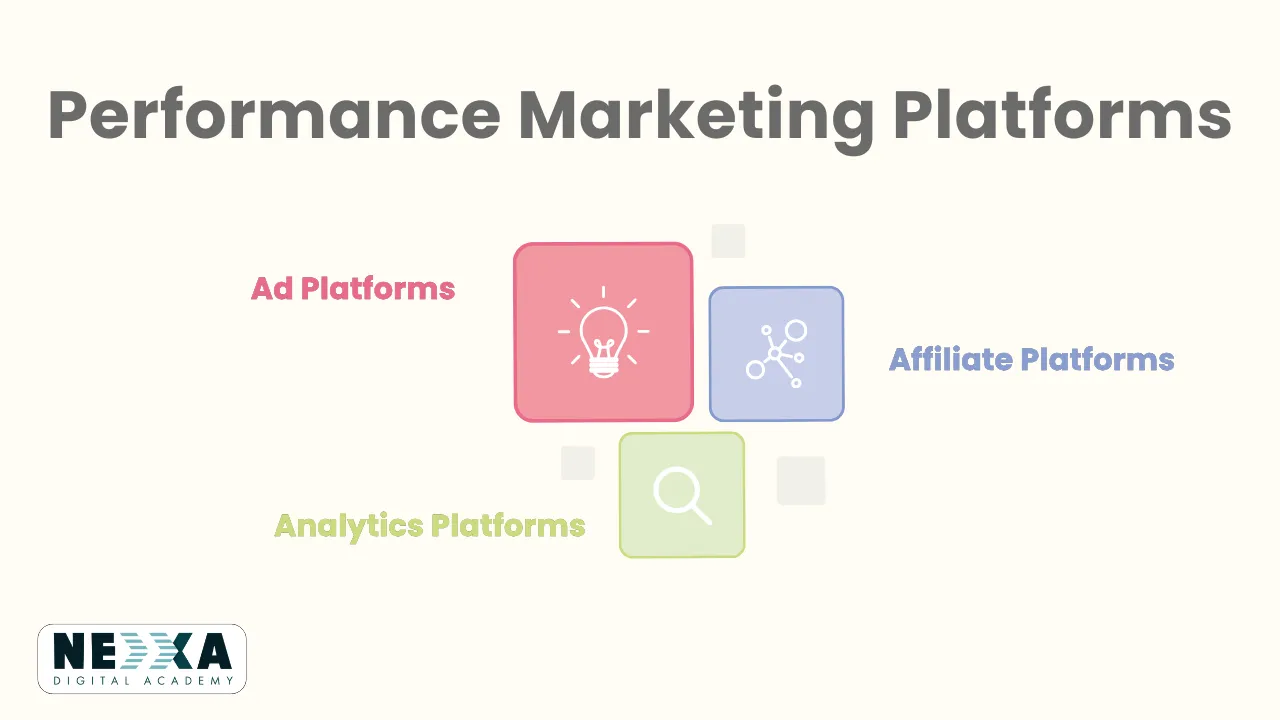
The right performance marketing platforms make every campaign work well. These tools are really helpful for advertisers because they can run and track and make their campaigns better, on different channels all from one place.
1. Ad Platforms
These are the places where people make and manage campaigns. The ones that people use the most are Google Ads for search and display Meta Ads Manager for Facebook and Instagram, LinkedIn Campaign Manager for business to business targeting and DV360 for advertising. People use Google Ads to show ads when people search for things and to show display ads. People use Meta Ads Manager to make ads for Facebook and Instagram. People use LinkedIn Campaign Manager to target businesses. People use DV360 to do advertising for their campaigns.
2. Affiliate Platforms
These handle connections between advertisers and publishers. Common choices consist of Impact, CJ Affiliate, and ClickBank. They automatically manage tracking, payments, reporting, and fraud prevention.
3. Analytics Platforms
These helps to measure results. Google Analytics 4 (GA4) is the benchmark for tracking websites in the industry. Looker Studio assists in building visual dashboards. AppsFlyer and Adjust are commonly utilized for tracking mobile app campaigns.
Marketing Performance Metrics
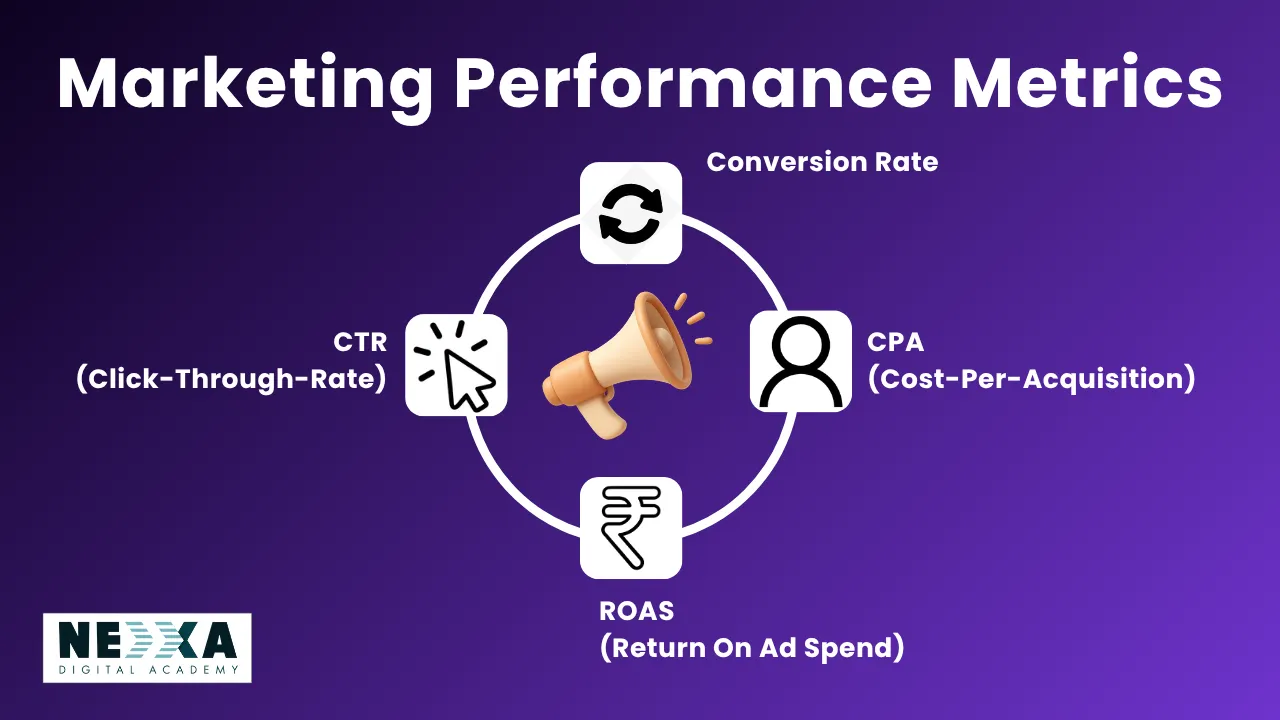
Understanding marketing performance metrics is essential if you aim to execute successful campaigns. These figures indicate if your campaigns are producing actual outcomes or simply wasting money.
1. CTR (Click-Through Rate)
CTR indicates the number of individuals who clicked on your ad compared to the total number of viewers. A greater CTR indicates that your ad content and design connect well with your audience. Formula: (Clicks divided by Impressions) multiplied by 100.
2. Conversion Rate
The conversion rate indicates how many users who clicked proceeded to complete the intended action, such as making a purchase, registering, or downloading. A strong conversion rate indicates that your landing page and offer match user intent effectively.
3. CPA (Cost Per Acquisition)
CPA evaluates the average cost spend to gain a single customer or lead. It is a key metric for assessing marketing performance and understanding profitability. Equation: Total Expenditure ÷ Total Conversions.
4. ROAS (Return on Ad Spend)
ROAS indicates the revenue generated for each rupee invested in advertising. It represents the highest standard of campaign effectiveness. Formula: Income Earned ÷ Advertising Expenditure. A ROAS of 4 indicates that you generated ₹4 for each ₹1 invested.
Performance Marketing Tools
The proper tools distinguish between uncertainty and certainty, enabling you to monitor campaigns, examine data, and automate activities so you can concentrate on strategy.
1. Tracking Tools
These guarantee that you understand precisely the origin of each conversion. Google Tag Manager makes it easier to implement tracking codes. Meta Pixel monitors user actions on your website following their click on a social advertisement. AppsFlyer and Branch are leading options for mobile tracking.
2. Analytics Tools
These convert raw data into practical insights. Google Analytics 4 is crucial for analyzing website performance. SEMrush and Ahrefs are effective tools for researching keywords and competitors. Looker Studio enables the creation of personalized dashboards that retrieve data from various sources.
3. Automation Tools
These reduces the need for manual works. HubSpot and Marketo streamline email and lead nurturing processes. Zapier links platforms and streamlines data transfers. Google’s Smart Bidding leverages machine learning to automatically adjust bids in real-time to meet your desired CPA or ROAS.
Brand Marketing vs Performance Marketing
Both serve different goals, understanding when to use each is very crucial to a complete strategy.
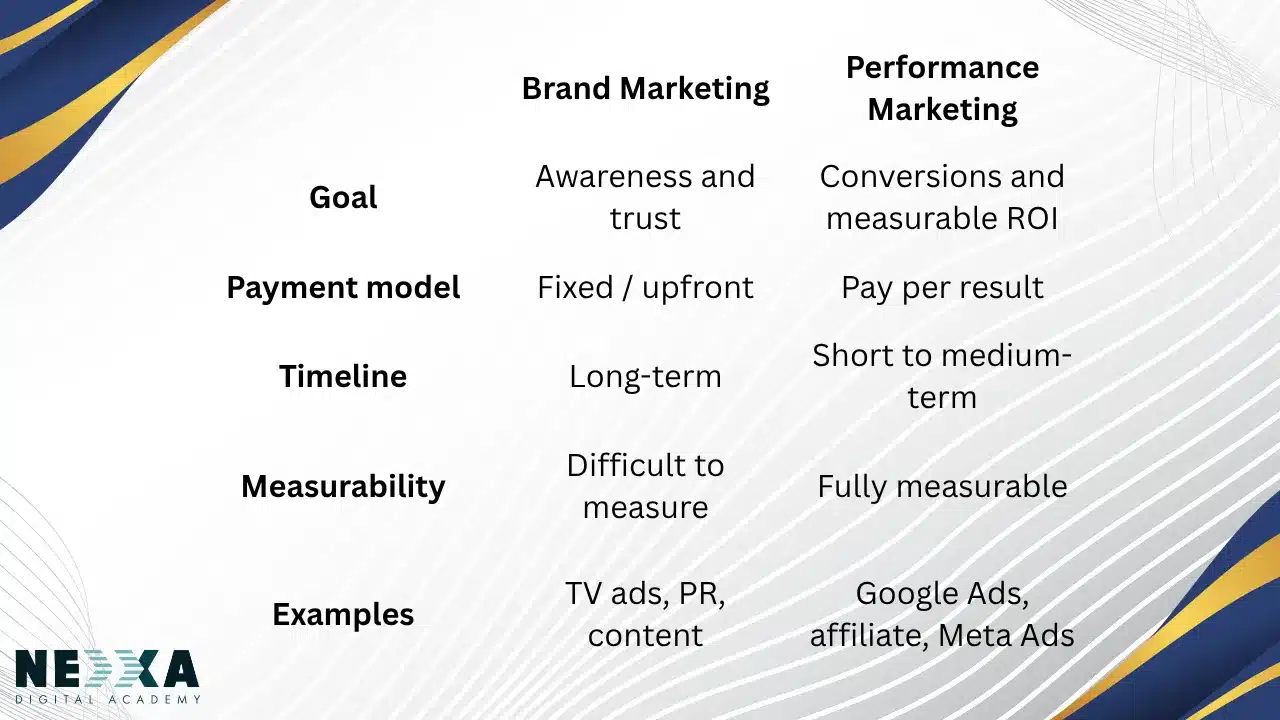
How and When to Use
Utilize brand marketing when introducing a new product or creating lasting value. Utilize this method when you require swift, quantifiable outcomes — such as leads, sales, or installations, within a specified budget. The most effective companies integrate both: brand marketing fosters trust, whereas the performance-driven approach transforms that trust into action.
Performance Marketing Solutions
When executed properly, it produces results that few other approaches can rival.
Benefits
Advertisers gain total control over spending and results. There’s no unnecessary expenditure—you only pay when outcomes are achieved. Campaigns maintain complete transparency with real-time data consistently.
ROI
The most compelling point in this case is ROI. Since every step in a performance marketing campaign is monitored and every expense is linked to an outcome, you can determine your precise return at any time, simplifying the process of defending budgets, expanding successful strategies, and eliminating those that fail.
Scalability
When a campaign becomes profitable, scaling is easy – raise the budget, reach new audiences, or incorporate additional channels, establishing it as the preferred growth engine for businesses of all sizes.
Career Scope in Performance Marketing
It ranks among the quickest expanding and most lucrative career paths in digital marketing currently. With an increasing number of companies reallocating their budgets to online platforms, the need for proficient specialists is rapidly escalating, particularly in India and Kerala.
Performance Marketing Jobs
Roles
The most in-demand performance marketing jobs are Performance Marketing Manager, Paid Ads Specialist, PPC Analyst, Growth Hacker, Media Buyer, and Affiliate Marketing Manager.
Skills Required
To excel in these positions, you require practical expertise in Google Ads, Meta Ads Manager, Google Analytics 4, conversion tracking, A/B testing, and budget management. Employers highly value analytical thinking and the ability to promptly act on data.
Salary
This is the top-earning specialization in digital marketing in Kerala. New graduates with solid hands-on training can make between ₹18,000 and ₹25,000 monthly. Mid-level employees generally make between ₹35,000 and ₹65,000 each month. Senior experts can earn over ₹1 lakh monthly based on their performance outcomes.
Conclusion
Performance marketing is what advertising is about right now. It is about getting real results that you can actually measure, rather than just making guesses. When you really understand the channels, platforms and tools you can get a lot out of it. This is good for both companies and people who work in the field.
Brands can keep growing and making money because they can see what they are getting back for what they spend. Marketers can also learn skills that’re really valuable and can help them make a good living. Unlike ways of doing things you can track everything that is happening and make changes to get better results.
If you want to run campaigns for people grow your own business or get a top job in performance marketing this is a great field to be in. It also helps you make decisions based on real numbers and information. By 2026 you will really need to know about performance marketing if you want to stay and do well in the digital world. Performance marketing is essential for anyone who wants to stay competitive and succeed. Performance marketing is the key to thriving in this changing digital landscape and mastering performance marketing is crucial, for anyone who wants to do well.
FAQ
1. What is performance marketing in simple words?
It is a type of digital advertising where you only pay when a specific result happens, like a click, sale, or lead. It is completely measurable and ROI-driven.
2. What are the main performance marketing channels?
The main platforms include search engines (Google Ads), social media (Meta, LinkedIn), affiliate networks, and email marketing.
3. What are the best performance marketing platforms?
Top platforms consist of Google Ads, Meta Ads Manager, DV360, Impact (for affiliates), and Google Analytics 4 for tracking and reporting.
4. What are the top performance marketing jobs in Kerala?
Key positions in Kerala consist of Performance Marketing Manager, PPC Specialist, Google Ads Expert, and Media Buyer — each offering significant salary growth opportunities.
5. What is the difference between brand marketing and performance marketing?
Brand marketing emphasizes recognition and enduring trust. The results-driven model emphasizes quantifiable results such as sales, leads, and app downloads using a pay-for-outcome method