
The Importance of Distribution Channels in Marketing
Marketing is a focus area of a business. The marketing process creates awareness of products and services through promotion to a target potential buyer market. It is not enough to just have strong marketing strategies promoting your product to prospective customers if they never get a chance to see to purchase your product due to lack of distribution channels, product availability and selection. Distribution channels are a critical component of any marketing strategize.
Distribution channels are the road in which the product takes from the mass manufacturing, wholesaler, retailer or e-commerce vendor selling the product. Distribution channels are critical attributes to reaching your target market of customers and being able to sell your product.
What Are Distribution Channels?
A distribution channel is defined merely as the path a product takes between the maker and the buyer. A distribution channel illustrates the means by which brands distribute their products to buyers and serves as a user-friendly route for companies to sell and deliver their products in an effective and cost-efficient manner. Distribution channels can take many forms of intermediaries including wholesalers, retailers, agents, and e-commerce. Each of these companies does some form of market research, promotes the product, and engages the buyer for the manufacturer.
Why Distribution Channels Are Important in Marketing
Distribution channels provide businesses several advantages. They are responsible for ensuring customers have their products at the time they desire, managing stock levels, and providing important data on what is made available to market for customers to consume. At this point, let us review the main drivers on why distribution channel is important.
1. Timely Product Delivery
Distribution channels provide for timely delivery of product to customers. Timeliness is paramount because if customers cannot find a product available to them at the time they need it, they will become dissatisfied. Proficient distribution will ensure that your products are present at the time a buyer wishes to purhcase.
2. Removing Distance Barriers
Distribution channels provide businesses the capacity to displace distance as a limitation. Distance as a limitation also allows businesses to serve customers that are not in close proximity to the location of their manufacturing facilities. A business in one city can get products to customers at a different city, or state, or even across the globe with a properly constructed distribution network.
3. Maintaining Adequate Stock
Distribution channels also help by maintaining adequate levels of inventory of products. They store products in warehouses and supply them as demand in the market dictates. This serves as a buffer against the risk of any shortages developing in the market so customers can buy a product when they want.
4. Providing Market Information
Businesses gain valuable market intelligence through distribution channels. Intermediaries in the distribution channels provide information about supply and demand, pricing, and competition and customers use distribution channels to provide valuable feedback and recommendations used to inform decision-making and strategic planning by businesses.
5. Product Promotion and Sales
Distribution channels serve in marketing products as intermediaries will market the products available to the customers. They introduce new products and demonstrate the product strategy and benefits to customers motivating them to purchase. For these reasons, distribution channels are an important part of getting products marketed and promoted efficiently.
6. Financial Support
Businesses can receive financial assistance through distribution channels. Intermediaries will purchase large quantities of products from producers and pay them upfront. Intermediaries will then sell products in the quantities that customers want, often providing credit to customers for their purchases. Regulating business cash flow is critical for ensuring a businesses ability to meet their payment obligations to producers in a timely matter.
7. Employment Generation
Distribution channels create jobs by providing employment to many people in the economy. Wholesalers, retailers, agents, and delivery people, as well as possible staff, earn a living through distribution channels. Consequently, distribution channels, as methods of getting merchandise to customers, provide a lot of good employment to people.
8. Risk Management
Risk is always evident in a business, but risk can often be resolved with efficient distribution channels. Intermediaries assume the risk of getting product to customers, and as a result, they are responsible for making sure the product is delivered safely, on time, and at the lowest price. Intermediaries deal with inventory, transportation, and delivery, so the producer can be better focused on the production of the product.
Types of Distribution Channels
Businesses can receive financial assistance through distribution channels. Intermediaries will purchase large quantities of products from producers and pay them upfront. Intermediaries will then sell products in the quantities that customers want, often providing credit to customers for their purchases. Regulating business cash flow is critical for ensuring a businesses ability to meet their payment obligations to producers in a timely matter.
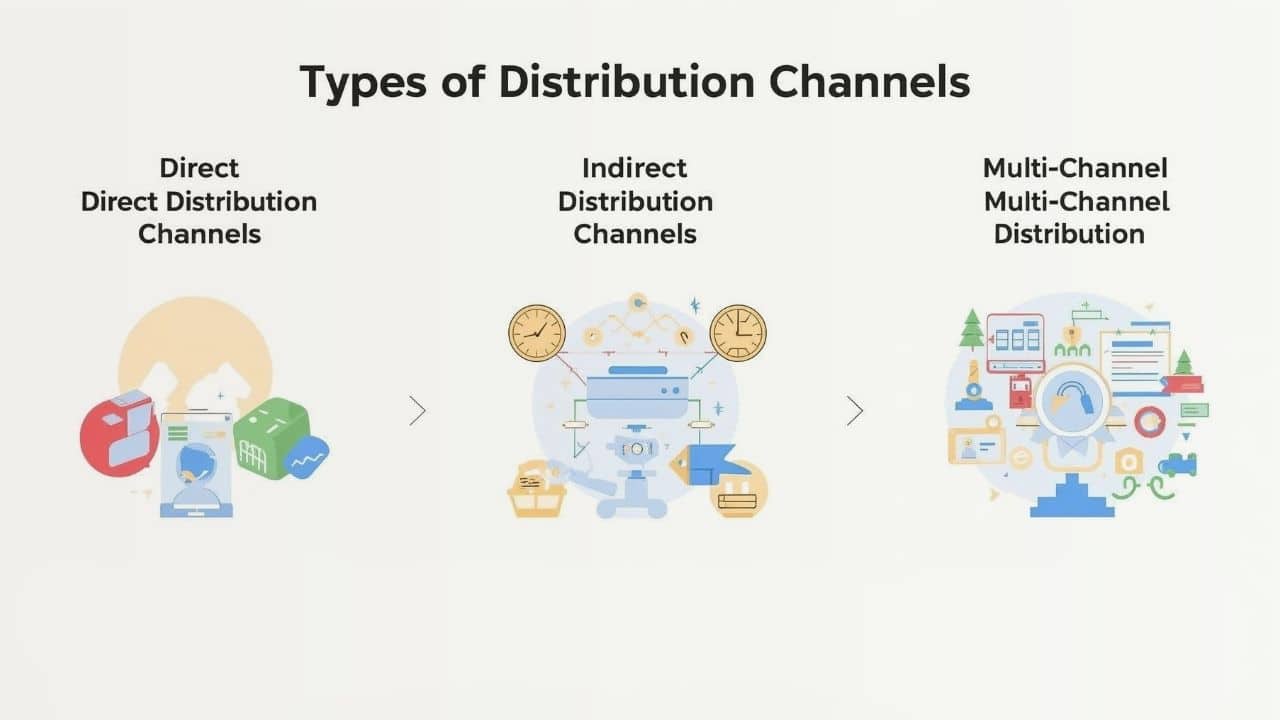
1. Direct Distribution Channel
A direct channel occurs when the product manufacturer sells directly to the product-consumer without intermediaries. Examples are company-owned stores, branded websites, or direct sales.
Advantages:
- Total control over the consumer experience
- Total profit margin from sales
- Direct feedback from customers
- Better control over brand
Disadvantages:
- High investment involved
- Limited reach in any one geography.
- More work to operate.
2. Indirect Distribution Channels
A distribution channel involving the manufacturer and consumer with one or more intermediaries between the two.
One-Level Distribution Channel: Manufacturer to Retailer to Consumer
This channel is often used for items like furniture and electronics where manufacturers sell product to retail locations that in turn sell to the consumer.
Two-Level Distribution Channel: Manufacturer to Wholesaler to Retailer to Consumer
This channel is the traditional distribution network that does well with packaged food/candy/beverage household products, etc. A wholesaler typically buys the product in bulk and then sells typically to a few smaller retail stores.
Three-Level Distribution Channel: Manufacturer to Agent to Wholesaler to Retailer to Consumer
Three-step channels can be even longer in a distribution channel where agents are involved to connect the wholesaler and the manufacturer. In a domestic and/or international pharmaceutical distribution market long chain distribution models typically exists.
3. Multi-Channel Distribution
Many modern businesses will employ more than one, concurrent distribution channel. A clothing brand may sell products through its owned stores, department stores, and/or online marketplaces. This strategy provides an added distribution source.
How Distribution Channels Support Marketing Success
Distribution channels are factors in marketing success. Here’s how.
1. Increasing Product Availability
The first rule of marketing is quite simple: you cannot sell what customers cannot find. Distribution channels expand the number of existing sales opportunities. Every store that carries your product is another potential sales opportunity.
Consider Coca-Cola as an example of distribution in use. Their products are available in mom and pop shops, restaurants, airports, and vending machines around the world, basically anywhere you want a beverage, you are likely to find Coca-Cola product. The simple fact that Coca-Cola is available everywhere is a big part of their success across the globe.
2. Better Customer Service
Customers of products appreciate convenience. By having your products locally available through retail partnerships, customers can look and feel the products prior to actually purchasing them. If a product does not work or something else goes awry, it is easy for the customer to return the product or seek attention from the retailer.
3. Working with Partners for Promotion
Your distribution partners will assist in the promotion of your products. Retailers will make promotions with displays, recommend products, and demonstrate features to customers. This is promotion, and it could happen without you spending additional features of advertising money.
4. Building Competitive Advantage
Sometimes distribution can be, or become, your greatest competitive advantage. If you developed a distribution network that cannot easily be replicated by competitors, you have created a sustainable value to your business.
Choosing the Right Distribution Channels
Not every distribution channels fit every product. We gives a guide to help you select wisely.
1. Understand Your Customers
Where do your customers like to shop? If you are targeting young consumers, your best option may be online channels. If you have luxury products to sell, you want to be sure to have your product available in premium retail outlets.
2. Consider Your Product Type
If you are going to build out a distribution channel, be prepared to make an investment. Given the potential costs to open channels, it is essential to realistic assess what your business can afford. You will also find that businesses may have more success starting simply and building scaled business over time rather than trying to do too much too soon.
3. Check Your Resources
Building distribution channels requires investment. Be realistic about what your business can afford. Starting small and growing gradually often works better than trying too much too soon.
4. Study Your Competition
Take a look at your competitors distribution channels. Where are they successful? Where did they miss an opportunity? It is important you take this assessment and make informed decisions based on previous observations.
5. Calculate Costs and Profits
Keep in mind that as you add distribution intermediaries, all of those intermediaries will take a piece of your profit share. More intermediaries means sharing a larger piece. And even though it is possible to charge lower profit margins, you may find it more effective to sell higher volumes with a bit of a lower profit margin rather than wait for sales at a higher margin.
Real Examples of Good Distribution
Amazon
Amazon has created one of the best distribution systems in the world. They invested in warehouses and delivery systems to devote thousands of employees and trucks. Now they can deliver a product to a customer in a matter of days – perhaps one of the biggest reasons people land on Amazon in the first place.
McDonald's
McDonald’s has gotten as many restaurants as they can practically acquire, and that is an important part of their distribution system, so a customer can find a McDonald’s no matter where they are.
Asian Paints
Asian Paints built such a strong distribution network in India that even small villages have the ability to purchase their products. They worked hard to create relationships with dealers and retailers to achieve that. Their expansions in distribution played a large part in them becoming the leader in the market.
Common Mistakes to Avoid
1. Ignoring Channel Conflicts
When you have multiple channels, channel conflicts can arise. For example, if your online prices are lower than your retail prices, your retail partners may complain to you. Create clear channel policies to avoid conflicts.
2. Depending on Only One Channel
Depending entirely on one channel is dangerous as it puts a great deal of risk on your entire business. If that channel runs into troubles, your whole sales will be negatively hit. It is always safer to have multiple channels to minimize risk.
3. Not Maintaining Good Relationships
Distributors and retailers are your business partners, and not just your vendors. Good relationships with these partners will help to drive better performance in your business.
4. Not Adapting to Changes
Markets change. Customer preferences change. Technology creates new ways of doing things. Make sure to take a good look at your distribution strategy on a regular basis and evaluate if changes should be made.
The Future of Distribution Channels

1. Online and Offline Working Together
The future is not about choosing online or offline; it is about connectively collaborating the two. Customers may start their research about purchasing products online and then finish the transaction in stores, and vice versa. Business will need to fulfill orders via both avenues/providing these service.
2. Technology Making Things Better
Technologies such as artificial intelligence and automation will provide better services for distribution channels. Technology can predict demand better, allow for automated warehouses, and initiate smart logistics which will provide more effective, faster, and cheaper avenues of distribution.
3. Focus on Sustainability
Increasingly, consumers are interested in the environmental impact. The mode in which the products in your inventory are delivered has relevance. Eco-friendly packaging and carbon neutral delivery of products will become consequential.
4. Faster Local Delivery
People can now receive deliveries or use food delivery to receive their items. The underpinning of faster delivery will become a must for organizations both large and small.
Conclusion
Distribution channels are critical to marketing success. Even though you may focus on advertising and social media, it is in channels that your marketing plans become actual results. When knowing your distribution, you can ensure customers actually have access to buy your product. Your distribution will determine your pricing, creates customer perception of your brand, and influences sales and profitability.
For those of you who are the future of digital marketing professionals or business owners, recognizing the importance of distribution is necessary. It’s common practice to recognize a successful business recognizes distribution is too often seen as a minor detail rather than a significant detail of their overall marketing strategy.
As you begin creating your marketing plans, remember the importance of a suitable distribution plan. Select your distributions channels accordingly, coordinate with your distributors, and be flexible and willing to change your plan if necessary. But most importantly, always advocate for the customer’s convenience!
In today’s saturated market, simply having a good product is just the start of the process. Getting that product to your consumer in an efficient and convenient way is the critical part of the process that ultimately leads to successful business. Distribution channels is the true muscle of your marketing plans.
FREQUENTLY ASKED QUESTIONS (FAQs)
1. What is a distribution channel?
A distribution channel is the path a product takes from the manufacturer to you, the customer.
For example, when you buy a chocolate bar from a shop, it didn’t come directly from the factory. The factory sold it to a wholesaler, the wholesaler sold it to the shop owner, and then you bought it. This path is called a distribution channel.
2. Why do businesses need distribution channels?
Businesses need distribution channels for several simple reasons:
- Reach more customers: A manufacturer cannot open shops everywhere. Distribution channels help reach customers in different cities and towns.
- Save money: Setting up your own stores everywhere is very expensive. Using distributors and retailers is cheaper.
- Focus on making products: Manufacturers can focus on production while distributors handle selling and delivery.
Get products to customers faster: Distributors keep stock ready, so customers can buy products immediately.
3. What is the difference between direct and indirect distribution?
Direct distribution means the company sells directly to you without any middleman. Examples:
- Buying from a company’s website
- Buying from a brand’s own store
- Farmer selling vegetables directly to you
Indirect distribution means the product goes through middlemen before reaching you. Examples:
- Buying groceries from a local shop (product came through wholesaler and retailer)
- Buying clothes from a department store
- Buying medicines from a pharmacy
Direct distribution gives companies more control but costs more. Indirect distribution helps reach more people easily.
4. How do I choose the right distribution channel for my product?
Choose your distribution channel by asking these questions:
- Where do my customers shop? If they shop online, use e-commerce. If they prefer stores, use retail channels.
- What type of product do I have? Fresh food needs fast delivery. Expensive items need special handling.
- How much money can I invest? Opening your own stores costs a lot. Using distributors costs less.
- Do I need to explain the product? Technical products need sales staff. Simple products can sell through any channel.
Start with one or two channels. Add more channels as your business grows.
5. What are common mistakes in using distribution channels?
Mistake 1: Using only one channel Don’t depend on just one distributor or store. If they have problems, your sales stop.
Mistake 2: Wrong pricing If your online price is much lower than store prices, shop owners get angry. Keep prices balanced.
Mistake 3: Ignoring your partners Distributors and retailers are partners. Talk to them regularly. Help them sell your products.
Mistake 4: Not checking performance Always check if your distribution is working well. Are products reaching on time? Are customers happy?
Mistake 5: Never changing Markets change. Customer habits change. Review your distribution channels every year and make improvements.
Avoid these mistakes to build successful distribution channels.