Performance Marketing vs Digital Marketing: 7 Must-Know Secrets for Faster Success
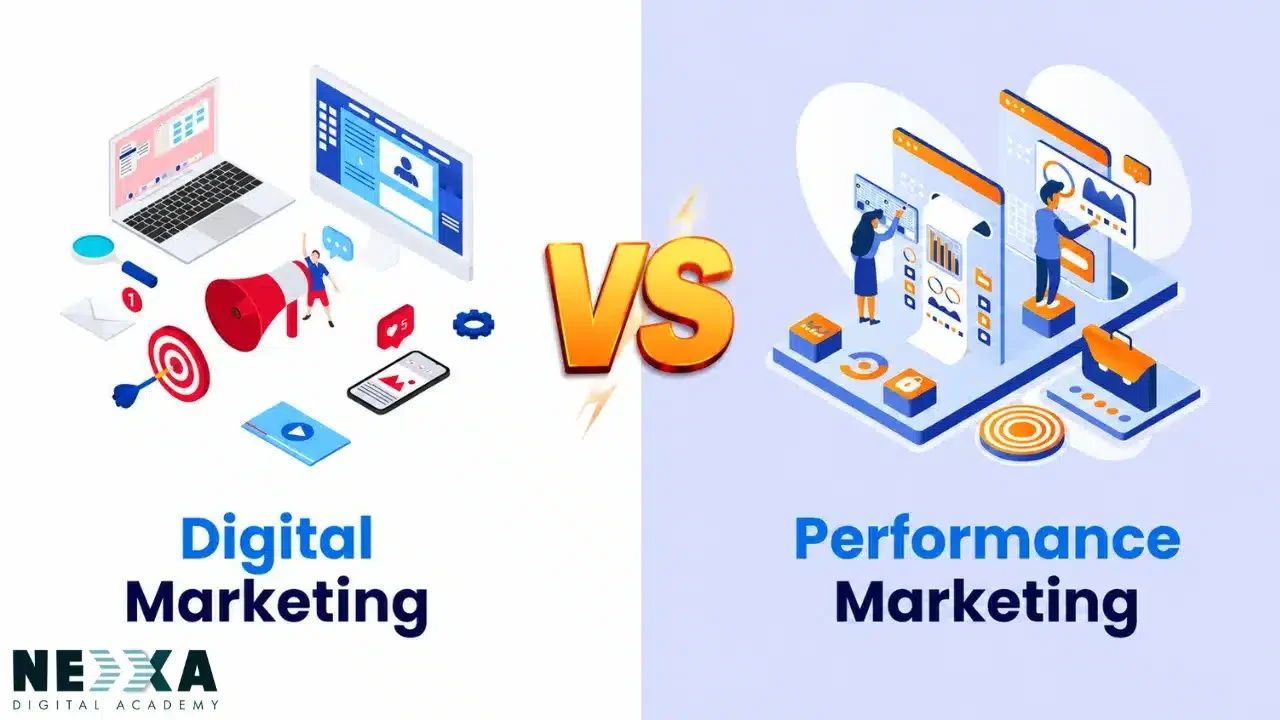
Ask ten business owners what the difference is between performance marketing and digital marketing, and you’ll hear ten different answers — and honestly, a lot of them won’t be right. It’s one of those confusing areas that ends up costing real money. I’ve seen brands spend heavily on ads expecting long-term brand recall (that’s not really how ads work), and others spend months on content without tracking conversions at all — then wonder why sales never showed up.
Here’s the reality: performance marketing vs digital marketing isn’t really a competitionwith each other. They just do different jobs. Once you understand that, your marketing budget starts working a lot smarter instead of quietly draining away.This guide breaks it all down in a way you can actually use.
What is Digital Marketing?
Digital marketing is basically the big umbrella. If it happens online — it falls under this. Websites, search engines, emails, social media, apps — all of it.Not every digital effort is meant to drive an instant sale. In fact, a lot of it isn’t. Some of the best-performing digital marketing work pays off much later. Think of a blog post that ranks on Google years after you publish it, or a social post that slowly builds trust over time.The focus here is simple: visibility, trust, and relationship-building. Sales come later. This long-game approach is at the core of most digital marketing strategies for small business owners..
Key Channels in Digital Marketing
The main ones include SEO, content marketing, email marketing, organic social media, influencer collaborations, and your own platforms like websites or newsletters.
Each channel has its own role, but they all share one thing — they’re built for long-term growth, not quick wins they’re built for long-term growth, not quick wins. This is exactly why solid digital marketing strategies for small business growth tend to focus on compounding visibility rather than one-off wins.”
What is Performance Marketing?
If you’re asking what is performance marketing, the simplest way to put it is this: it’s marketing where every rupee spent is tied to a measurable result.Clicks, leads, sales, installs — everything is tracked. Performance marketing is actually a part of digital marketing, but it works very differently. It’s focused, data-driven, and immediate. While digital marketing builds the relationship, a strong performance marketing strategy focuses on getting the result — fast.”
Key Channels in Performance Marketing
This includes Google Ads, Meta Ads, display advertising, affiliate marketing, and retargeting.Most of these operate on models like CPC (cost per click), CPA (cost per acquisition), or CPL (cost per lead). You pay when something actually happens — which is why performance marketing is often easier to justify when budgets are tight.
Performance Marketing vs Digital Marketing: Key Differences at a Glance
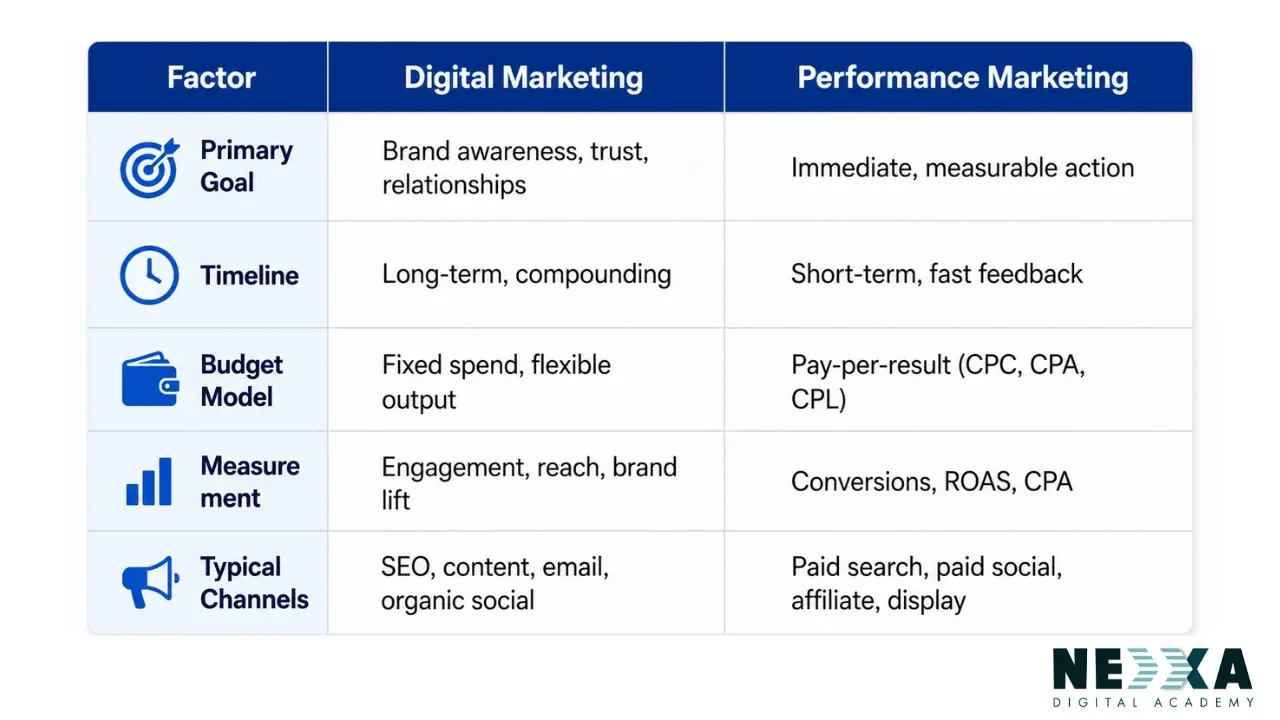
Looking at it this way, the difference becomes pretty clear. One builds over time, the other delivers quickly. Neither is better — they just solve different problems.
Building Brand Equity: Essential Digital Marketing Strategies for Small Business
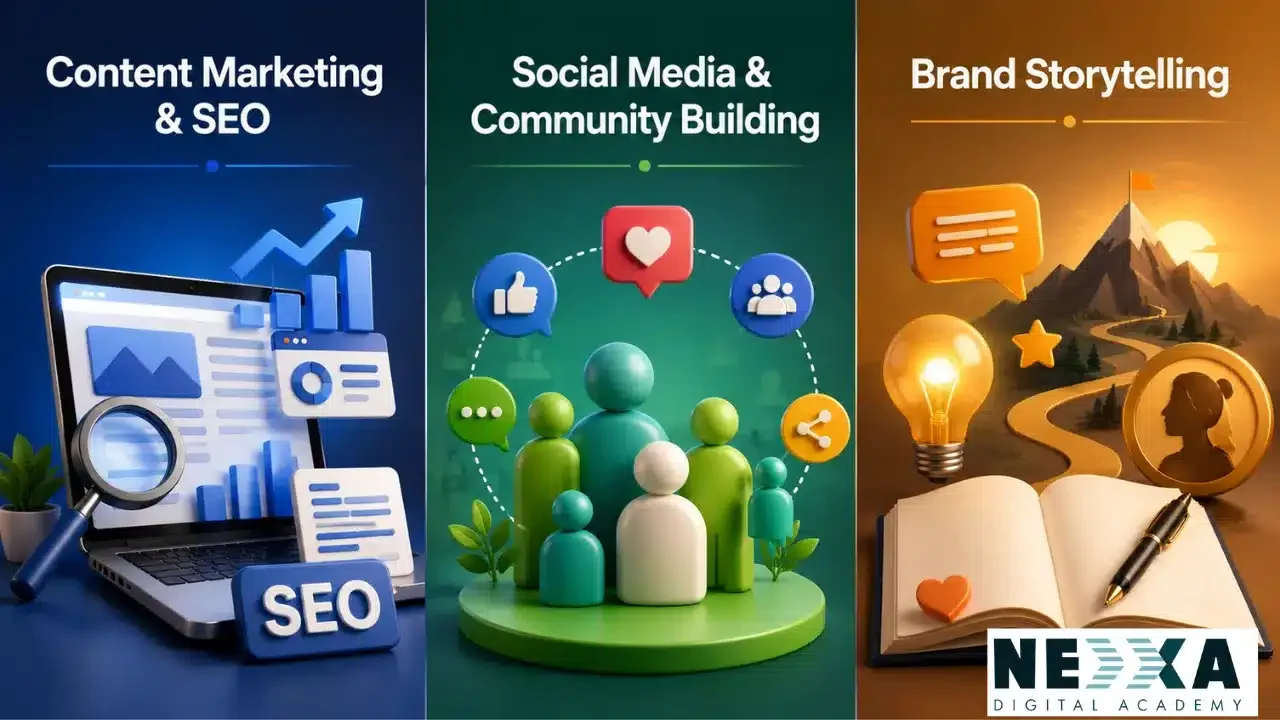
If no one really knows your brand yet, your first priority should be visibility — then trust. Not the other way around. This is usually the starting point for digital marketing strategies for small business teams working with a limited budget
Content Marketing & SEO
Showing up on Google when people are already searching for what you offer is still one of the most reliable ways to get attention. A solid blog, well-structured service pages, and consistent publishing can build momentum over time. It’s not fast — no point pretending it is — but the results tend to last much longer than ads.Lorem ipsum dolor sit amet, consectetur adipiscing elit. Ut elit tellus, luctus nec ullamcorper mattis, pulvinar dapibus leo.
Social Media & Community Building
Organic social media isn’t really about going viral (even though everyone wants that). It’s about being present consistently. Replying to comments, sharing real updates, engaging with your audience — these small actions build familiarity. And over time, familiarity turns into trust.
Brand Storytelling
People don’t remember taglines. They remember stories. Sharing why your business exists, what problems you’re solving, and who you’ve helped — that’s what makes your brand feel real. It’s something performance ads alone can’t fully replicate.
Driving Immediate ROI: Crafting a Winning Performance Marketing Strategy
If you need results now — not months later — performance marketing is the way to go. A tightly built performance marketing strategy is what makes that speed possible.
Paid Search & Social Ads
Google Ads captures people who are already searching with intent. Social ads (like Meta or Instagram) work differently — they target based on interests and behavior. But here’s where many go wrong: if your ad message doesn’t match the landing page, you’ll lose money fast. It’s one of the most common mistakes.
Conversion Rate Optimization
More traffic doesn’t always mean more sales. Sometimes improving your conversion rate — even slightly — can make a bigger difference than increasing your ad spend. Testing headlines, CTAs, page layout, or even load speed can have a real impact. Honestly, this is often overlooked.
Retargeting & Attribution
Most people don’t buy the first time they visit your site. That’s normal. Retargeting helps bring them back. And good attribution tracking helps you understand what actually influenced the sale — not just the last click.
Performance Marketing vs Digital Marketing: Which One Should You Choose?
This is where things usually get practical.
1. When to Prioritize Digital Marketing
If you’re building a new brand, entering a competitive market, or dealing with a longer sales cycle — digital marketing should come first. You’re not trying to sell immediately. You’re building awareness and trust.
2. When to Prioritize Performance Marketing
If you already have an offer that works and need revenue quickly, performance marketing is the faster route. It’s also useful for testing new ideas or products without waiting months for results.
3. Why Most Brands Need Both
In reality, most successful businesses use both together. Digital marketing builds trust and awareness. Performance marketing turns that into action. And over time, your ad costs often drop because you’re no longer targeting a completely cold audience.
The Blind Spots: Limitations of Performance Marketing and Digital Marketing
Neither approach is perfect on its own. Even the best performance marketing strategy or the best content calendar has gaps.
Where Digital Marketing Falls Short
It takes time. Sometimes a lot of it. SEO can take months before you see results, and organic growth isn’t always predictable. If you need quick revenue, this alone won’t be enough.
Where Performance Marketing Falls Short
The moment you stop spending, results stop too. Also, costs can increase as competition grows. And while it drives conversions, it doesn’t always build deep trust or brand loyalty.
Advanced Funnel Framework: Scaling Digital Marketing and Performance Marketing Together
The real advantage comes from using both in the right order.
Top-of-Funnel (Digital Marketing Led)
This is where content, SEO, and organic social come in. You’re attracting people who don’t know your brand yet.
Mid-Funnel (Blended Approach)
Here’s where things start to overlap. Retargeting ads keep your brand visible, while email or content builds trust. This combination works better than either one alone.
Bottom-of-Funnel (Performance Marketing Led)
At this stage, it’s all about conversion. Focused ads, strong offers, optimized landing pages — this is where decisions happen. “Focused ads, strong offers, optimized landing pages — this is where decisions happen. A well-sequenced performance marketing strategy at this stage is what actually closes the loop.
Conclusion
One builds awareness and trust over time. The other converts that attention into measurable results. Neither works well in isolation, and that’s the part most businesses get wrong. Rely only on ads, and costs can keep rising — the moment you stop paying, the traffic stops too. Rely only on organic growth, and things may move too slowly to keep the business afloat while you wait for it to compound. But when both are used together, in the right sequence, they support each other. Digital marketing brings in the audience and builds the trust; performance marketing turns that trust into revenue, faster and cheaper than it would convert cold.
That’s the real value of a good performance marketing strategy paired with solid digital marketing strategies for small business growth — not choosing one over the other, but knowing when each one should lead. That’s when performance marketing vs digital marketing stops being a debate and starts feeling like a system…”
FAQ
1. Is performance marketing part of digital marketing?
Yes, it is. Performance marketing sits under the broader digital marketing umbrella and focuses on measurable outcomes.
2. Which is better for a small business with a limited budget?
Usually, starting with performance marketing helps generate quicker results. Then you can reinvest into long-term digital marketing
3. How long before digital marketing shows results?
Typically between 4 to 9 months, depending on competition and consistency.
4. Can I run both at the same time on a small budget?
Yes. Many businesses split their budget depending on how quickly they need results.
5. What’s the biggest mistake businesses make?
Expecting fast sales from digital marketing, or long-term brand building from ads. Each has a different purpose.